Preventive Cleanings & Fluoride
Best for: Cavity prevention
Gentle professional teeth cleaning helps remove plaque and buildup. A topical fluoride application may help strengthen enamel and reduce the risk of tooth decay.

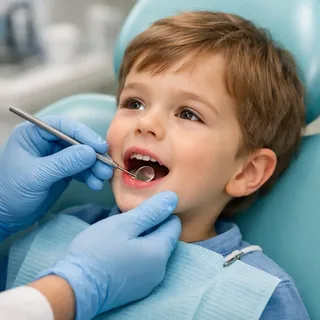
Pedodontics is the specialised branch of dentistry focused on children's oral health and dental development from infancy through adolescence. We help monitor growing teeth and jaws, prevent cavities, treat dental concerns, and build healthy brushing habits in a friendly, child-focused environment.
We provide child-focused dental treatments to help prevent cavities, protect developing teeth, restore damaged teeth, and support healthy dental development as your child grows.
Best for: Cavity prevention
Gentle professional teeth cleaning helps remove plaque and buildup. A topical fluoride application may help strengthen enamel and reduce the risk of tooth decay.
Best for: Protecting back molars
A thin protective coating is applied to the deep grooves of suitable chewing teeth to help keep food particles and bacteria from collecting in hard-to-clean areas.
Best for: Treating minor cavities
Decayed portions of baby or permanent teeth are treated and restored with a suitable filling material to help preserve tooth structure and chewing function.
Best for: Early loss of baby teeth
A suitable dental appliance holds the space left by a baby tooth lost too early, helping guide the developing permanent tooth into its intended position.
We make dental visits more welcoming for children with gentle care, preventive guidance, and treatments tailored to their growing smiles.
A warm, welcoming environment designed to help children feel more comfortable and reduce dental anxiety during their visits.
A compassionate approach that respects each child's comfort level, uses age-appropriate explanations, and helps make dental visits less intimidating.
We guide children in learning proper brushing, daily oral hygiene, and healthy habits that support their teeth as they grow.
From routine checkups and cavity prevention to fillings, dental sealants, and space maintainers, care is tailored to each child's needs.
From a warm welcome to helpful aftercare guidance, each step is designed to help your child feel supported and develop positive dental habits.
We introduce your child to the clinic in a friendly, welcoming way, helping them become familiar with the surroundings and feel more at ease.
We examine your child's teeth, gums, and bite development. Counting teeth and explaining each step can help make the visit more engaging.
When appropriate, we gently clean away plaque using suitable dental instruments and polishing products selected for children.
If needed, we discuss preventive treatments such as fluoride or sealants and demonstrate brushing techniques to help build healthy daily habits.
We celebrate your child's efforts with positive encouragement and age-appropriate praise to help build confidence for future dental visits.
Find answers to common questions about children's dental visits, preventive treatments, baby teeth, and pediatric dental emergencies.
We want parents and children to feel informed and comfortable. Explore helpful guidance about your child's dental health and treatment options.
Still have questions?
Contact Our Team ↗The American Academy of Pediatric Dentistry recommends scheduling your child's first dental visit by their first birthday or within six months after the first tooth appears. Early visits help identify concerns and allow your child to become familiar with the dental setting.
Yes. Baby teeth help children chew food, develop clear speech, and maintain the space needed for permanent teeth. Keeping them healthy also helps support your child's comfort and oral development.
Talk positively about the dentist as someone who helps keep teeth healthy. Reading children's books about dental visits or playing pretend dentist at home can help your child feel familiar with the experience. Use calm, reassuring words and answer questions honestly in an age-appropriate way.
Dental sealants are thin protective coatings placed on the chewing surfaces of back teeth, where food and plaque can collect in deep grooves. They can help reduce the risk of cavities, particularly in children's molars. A dentist can assess whether sealants are suitable for your child.
Sealants are widely used in preventive dentistry. Your dentist can explain the material and answer any questions about its suitability.
Contact a dentist promptly after a dental injury. If a permanent tooth is knocked out, hold it by the crown, not the root. If dirty, rinse it gently with milk or saline; do not scrub it. If possible, place it back in its socket only if this can be done easily and safely. Otherwise, keep it in milk and seek emergency dental care immediately.
Important: Never reinsert a knocked-out baby tooth. Seek urgent medical care if your child has severe facial injuries, uncontrolled bleeding, or difficulty breathing or swallowing.
